The power of community: A look into resident doctors working in intensive care
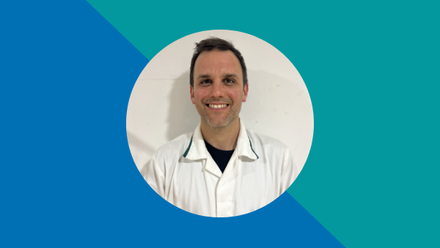
Our professional advisory groups bring specialists together, to share expertise and champion their field. Dr Ben Lowe is Chair of the professional advisory group (PAG) for resident doctors. He explains how the group is making work-life better for residents working in ICU across the country – through advocacy and education.
Despite initially thinking that I wanted to be a surgeon, I fell in love with intensive care medicine when I realised that I relished looking after the sickest patients in the hospital. We are in a uniquely privileged position where we meet patients on what is often the worst day of their lives and can make a massive difference to not only the patient, but their families, using a broad skillset of clinical reasoning, practical skills and expert communication.
As a key part of the intensive care team, resident doctors face unique challenges – from the complications associated with rotating every three to six months to the stresses of exams. As Chair of the group, I work with a team of residents to make sure the needs and views of resident doctors working in critical care are heard and acted on.
Access to an open and diverse community
Being a member of the advisory group, as well as more broadly ICS, has given me great opportunities to network with other professionals across the country. It's very easy to stay within your bubble locally, and ICS membership enables you to meet people from outside your normal network. That gives you different opinions and different views of the world, but also exposure to different clinical practice. It might be that we do something one way in Nottingham, because we've always done it that way, but you speak to someone over in Manchester, and they share a different way of doing it, helping you to improve care locally.
Representing the needs of our colleagues
Shaping key national policies and guidance is a core part of the group’s work, and we often do so alongside other organisations, such as the Faculty of Intensive Care Medicine (FICM) Intensivists in Training (IiT) Committee. For example, the initial draft of the Guidelines for the Provision of Intensive Care Services (GPICS) didn’t have a specific chapter on residents. Dr Andrew Davidson, a member of the advisory group, co-wrote a new chapter with our IiT representative colleagues at the FICM, and we’re now explicitly represented in the Guidelines.
Another example was our response to a marking error in a Membership of the Royal College of Physicians (RCP) exam. We put out a statement which supported the letter from the Resident Doctor Committees of the RCP (London, Glasgow and Edinburgh) and advocated not delaying progression into higher specialty training for those affected. While the error only affected a small number of people working in intensive care, it had the potential to affect their career progression and result in significant personal upheaval in re-sitting the exam.
Advocating for better wellbeing support
Another key part of the group’s work is improving wellbeing support for residents. This is critically important for all residents, but especially so when working in such an emotionally demanding environment as ICU. Not only will better wellbeing support significantly improve work-life for resident doctors, but it will also ultimately enable us to deliver better patient care. As a group, we’re putting together guidance around basic things that Trusts and employers can do to support us. For example, with some of us rotating every three or six months, we frequently have to repeat HR onboarding processes, and we are advocating for a lead employer model to improve this.
Resident doctors on intensive care undertake a lot of out-of-hours work. We want everyone to have adequate rest spaces, both whilst on shift or if we’re too tired to drive home after a 12- or 13-hour shift. It’s about getting some basics down on paper, so that organisations can put fundamental wellbeing practices in place.
Tailored training for residents working in ICU
Training and education are also important areas of our work as an advisory group. Towards the end of the year, we will be running a dedicated event for resident doctors, which will include educational content relevant to all residents. Training will also be linked to the curriculum, particularly around areas that can be tricky such as palliative care and toxicology.
We’re also creating some podcasts to improve our educational offering. We want to make them as relevant as possible to residents who have to commute a decent distance, so we’re creating curriculum-linked podcasts that are a commute length. Some will be suited to new starters, covering the basics of intensive care – like what an arterial line is – and will give short, easily accessible blocks of information.
Get involved
If you’d like to meet other residents working in ICU, ICS events are an easy way to network – and we have over 600 resident doctor members. I’d encourage anyone interested to come along to State of the Art, join us at a ‘Meet the PAG’ session and of course join us at the social. Find out what we do, ask questions and get involved. And with the elections coming up in May, don’t be afraid to stand. Being part of the advisory group is a great way to represent your peers and ensure the resident voice is listened to.
*******
Ben is the Chief Registrar at Nottingham University Hospitals NHS Trust and an ST8 in Anaesthesia and Intensive Care Medicine. At ICS, he is Chair of the Resident Doctors Professional Advisory Group, and also sits on Council and the Standards and Guidelines Committee.
Interested in standing for election? Learn more about the call for nominations open until 15 June 2026, including how to vote. All members are eligible to stand for election .
Or find out more about the Resident Doctors Professional Advisory Group.
Not yet an ICS member? Find out about the education, events, support, opportunities and networks you can become part of.