The power of community: A look into pharmacy in intensive care
Fascinating, challenging and rewarding
Right from the start of my career, intensive care really sparked my interest and enthusiasm. It’s such a privilege to be able to help people when they’re at their very most vulnerable. Alongside that, you’re working in a multi-professional environment where everyone’s professional opinions really count for something. That was evident right from the start of my career, when I worked in intensive care at a small district general hospital, just 18 months after qualifying as a pharmacist.
What we see in intensive care is that patients don’t fit within normal physiological rules. As a result, we need to adapt our approach to medicines use and optimisation so that the medicines are individualised for each patient, tailored specifically to them in that extreme physiological state. It’s fascinating and a challenge to work in such dynamic scenarios.
And there’s the emotional challenge of being involved with some patients who are at the end of their life. It feels like a privilege to be able to contribute in a meaningful way to those patients and their families.
Shaping national care during the pandemic
Being part of the PAG has allowed me to contribute to critical care at a national level. The group was set up in 2019, and I was nominated to be co-chair alongside a colleague. Only a few months into the group being established, Covid hit. It was so timely – and an enormous learning curve.
We had the opportunity to influence and contribute to discussions around the national response and management of Covid patients – not only responding to a new disease state, but also on a scale that we have never considered possible. We were in a position to rapidly coordinate the production of recommendations for drug dosing for patients receiving organ support on a scale we had never seen before, and to support education to upskill pharmacists from their normal roles to be able to safely work in that very, very intense environment.
And through the National Emergency Critical Care Committee we contributed to key discussions managing contingency plans as our medication supply chain came under increasing pressure. I am truly humbled to have observed and contributed at this level during such a pivotal period for our NHS. It’s difficult to find the words to describe my emotions.
Providing support, education and advocacy
Today, the group continues to support and advocate for our colleagues. We’re still the conduit between the ICS and our profession, and we’ve recently changed our name from the ‘Pharmacist PAG’ to the ‘Pharmacy PAG’. This is to improve our inclusivity, as pharmacy is the collective effort of two professional groups, pharmacists and pharmacy technicians – but also relies on the contribution from pharmacy assistants. We are really keen to broaden the inclusion and scope for careers for all pharmacy staff within critical care and to become more involved in our work at the Society.
One of the key projects we’ve contributed to recently is the Guidelines for the Provision of Intensive Care Services, working with colleagues including the Faculty of Intensive Care Medicine and the UK Clinical Pharmacy Association. It’s a real honour to contribute and influence our national benchmarking standard.
And another way we support colleagues is through the education we provide. Over the next year, that includes sessions at the Society’s State of the Art Congress 2026 and a series of webinars. There’s an absolute abundance of topics – from pharmacy-specific subjects, such as supporting pharmacists to develop from advanced level to consultant level, through to truly multidisciplinary areas, such as implementing continuous intravenous infusions of beta-lactam antibiotic agents. This shift to giving antibiotic agents continuously rather than intermittently is, on the surface, simplistic. There are however considerable benefits to doing so and effecting this change successfully is a logistical challenge for the whole MDT team, including doctors, pharmacists, nurses and physiotherapists. Our training will share real world examples of implanting, with contribution from a multi-professional group of critical care practitioners.
Collaborating with the world’s best critical care experts
Being part of the ICS has given me the opportunity to collaborate with world experts, who I can now refer to genuinely as colleagues. The Society is a vast network of experience, expertise and leadership. It’s incredible. We recently set up an ICS WhatsApp Community, with special interest groups covering infection control, cardiac critical care, neuro critical care, and medicines optimisation, to name a few. I can pop a message on them and am able to not only connect, but connect with the right people to give me the very best opinions or answers. That’s fantastic and one of the biggest strengths of our community, to connect and share practice of the very highest standard.
The ICS is simply an extrapolation of the working dynamic and relationships that I experience every day at work – everyone’s in it for the same reason, everyone’s in it together. The Intensive Care Society is the proud home of intensive care.
******
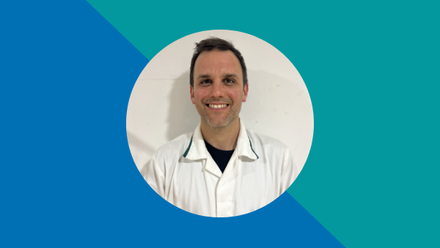
David is Consultant Pharmacist Critical Care and has been practicing critical care pharmacy since 2003. He now leads a team of ten pharmacists covering the 59 adult critical care beds at Cambridge University Hospitals NHSFT. He is chair of the ICS Pharmacy Professional Advisory Group.
Interested in standing for election? Learn more about the call for nominations open until 15 June 2026, including how to vote. All members are eligible to stand for election
Or find out more about the Pharmacy Professional Advisory Group.
Not yet an ICS member? Find out about the education, events, support, opportunities and networks you can become part of.