This focused study day brings together leading clinicians to share current insights and practical advances in the critical care management of burns, plastics and dermatological Emergencies. Sessions will explore evolving injury patterns, including inhalation, electrical, and chemical burns, alongside new approaches to fluid resuscitation and metabolic optimisation. Delegates will gain insight for best practice for early referral and initial management, discuss preparedness for mass casualty scenarios, and examine complex dermatological and surgical emergencies such as SJS/TEN and necrotising fasciitis.
The day concludes with a session on psychological trauma, emphasising resilience and wellbeing across patient and team care.
By integrating evidence-based updates with real-world application, this programme aims to strengthen clinical decision-making, multidisciplinary coordination, and preparedness across critical care and burn services.
 Learning Objectives
- Describe and apply the principles of timely recognition, triage, and transfer of patients with suspected acute ischaemic stroke, including identification of stroke mimics and use of video triage systems.
ICM HiLLOs: 5, 11, 12
ICS AHP Capabilities: Assessment & Decision Making; Communication; Systems & Pathways
- Critically appraise decision-making for mechanical thrombectomy, including interpretation of CT brain and CT perfusion imaging, patient selection, and the emerging role of AI decision-support tools.
ICM HiLLOs: 6, 11, 12
ICS AHP Capabilities: Clinical Reasoning; Evidence-Based Practice; Digital & Data Literacy
- Recognise and manage neurological deterioration following large vessel stroke, including malignant MCA syndrome and haemorrhagic transformation, and understand indications and timing for decompressive surgery.
ICM HiLLOs: 6, 12
ICS AHP Capabilities: Managing Complexity; Escalation of Care; Risk Management
- Explain principles of personalised neuromonitoring and optimisation of cerebral perfusion following neurosurgical intervention or thrombectomy to minimise secondary brain injury.
ICM HiLLOs: 6, 12
ICS AHP Capabilities: Monitoring & Interpretation; Use of Technology; Patient Safety
- Plan and contribute to early rehabilitation following critical illness due to stroke, including ventilator weaning, tracheostomy decision-making, communication support, and psychological care.
ICM HiLLOs: 8, 9
ICS AHP Capabilities: Rehabilitation & Recovery; Person-Centred Care; MDT Working
- Demonstrate effective multidisciplinary communication with patients and families around prognosis, goals of care, and uncertainty following severe stroke.
ICM HiLLOs: 1, 8, 9
ICS AHP Capabilities: Communication; Compassionate Care; Cultural & Ethical Practice
- Participate in and lead shared decision-making regarding tracheostomy, escalation, and de-escalation of treatment, including best-interests discussions after discharge from critical care.
ICM HiLLOs: 8, 9
ICS AHP Capabilities: Ethical Practice; Leadership; Advocacy
- Understand the legal and ethical framework underpinning withholding or withdrawal of life-sustaining treatment in stroke, including recent UK case law and its application to clinical practice.
ICM HiLLOs: 1, 8
ICS AHP Capabilities: Legal & Ethical Practice; Professional Accountability
- Coordinate safe repatriation and continuity of care closer to home, working across organisational boundaries between neuroscience centres and referring hospitals.
ICM HiLLOs: 5, 9
ICS AHP Capabilities: Systems Leadership; Integrated Care; Handover & Transitions
- Reflect on how multidisciplinary collaboration across the stroke pathway improves equity of access, patient outcomes, and experience, and identify opportunities for service improvement within local stroke networks.
ICM HiLLOs: 2, 9
ICS AHP Capabilities: Quality Improvement; Population Health; Service Development
 Programme
09:00
Opening Remarks & Objectives for the Day
Mel Duval
09:10
Inhalation Injuries from Fire to Modern Threats
Professor Suveer Singh
09:55
Fluid Resuscitation and the Hypermetabolic Response – What’s New?
Dr. Pete Berry
10:40
Q&A
10:50
Break
11:05
Burns Referral Pathways and Initial Management – Getting the First Hour Right
Nicole Lee
11:50
Mass Casualty Incidents – What If It’s Tomorrow?
- Pediatric considerations
- Electrical/chemical/radiation burns
- Mass casualty scenarios
Mr. Niall Martin
12:35
Q&A
12:45
Lunch Break
13:35
Dermatological Emergencies: SJS/TEN & NSTI
- Stevens-Johnson syndrome controversies
- Necrotizing soft tissue infections (NSTI)
- New SIARI scoring systems
- When to transfer to burns vs manage locally
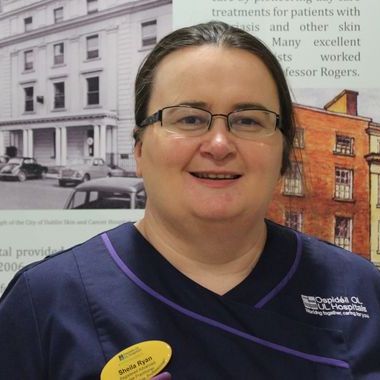
Sheila Ryan
14:20
Surgical Innovation & Decision-Making – From TBSA to Necrotising Fasciitis
- Enzymatic debridement updates
- Bioprinting trials
- Meek micrografting
- Include MDT surgical planning discussion
Elena Whiteman
15:05
Q&A
15:15
Break
15:25
Psychological Trauma: Team & Patient Resilience
Dr Raphaëlle Dusoulier
16:10
Close and Final Q&A
 Tickets and Pricing
| Member Prices | Early Bird Prices | Post-Early Bird Prices |
| Consultants | £140 | £165 |
| SAS | £95 | £112 |
| Trainee | £95 | £112 |
| Nurse | £95 | £112 |
| AHP | £95 | £112 |
| Associate | £95 | £112 |
| Student | £47 | £55 |
|
Non-Member |
Early Bird Prices | Post-Early Bird Prices |
| Consultants | £210 | £250 |
| SAS | £136 | £160 |
| Trainee | £136 | £160 |
| Nurse | £136 | £160 |
| AHP | £136 | £160 |
| Associate | £136 | £160 |
| Student | £62 | £72 |
 Group bookings
Group bookings can be made for multiple delegates and paid by credit card via the event booking page.
We are also able to invoice for group bookings of 10 or more delegates, or where the total value is over £1,000. Group bookings can only be made up to 6 weeks in advance of an event and must be paid in full prior to the event date to avoid tickets being cancelled.
To book a group via invoice, please download the form below, complete and return to [email protected].
 Contact us
If you have any questions about the event or need any further assitance, please do contact us via:
Telephone: (+44) 0207 280 4350
Email:
Speakers

Sheila (Julia) Ryan

Dr Pete Berry

Dr Raphaëlle Dusoulier
Melanconia Duval Pazzaglia
Nicole Lee