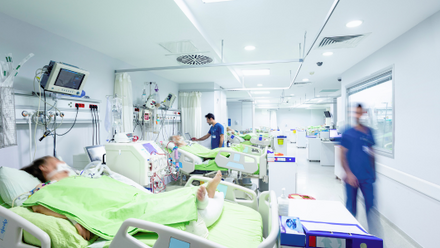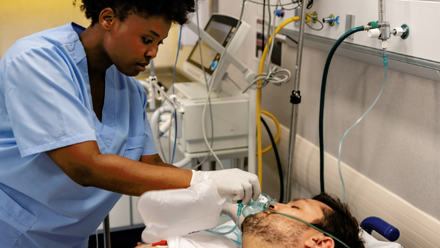
This intensive course covers critical decision-making in acute ischemic stroke (AIS) management. Expert faculty will guide participants through management, life-threatening complications with evidence-based approaches to decompressive craniectomy and post-operative neuromonitoring strategies.
Interactive panel discussions will tackle the challenges of post-stroke rehabilitation and crucial conversations around transitioning care featuring perspectives from both neurointensivists and general intensivists.
Ideal for Intensive care physicians and residents, stroke physicians and residents, and allied healthcare professionals involved in acute stroke care.
 Programme
08:45 - 09:00
Welcome and Introduction
Morning sessions will cover the patient journey from triage to neurocritical care management. The afternoon sessions will be interactive panel discussions with polls
Chairs: Dr PJ Zolfaghari and Dr Argy Zoumprouli
09:00 - 10:00
Triage and Transfer
Talks about video triage and stroke mimics and the transfer of the AIS patient to a neuroscience unit.
Speakers: Dr Rob Simister and Dr Carmen Lopez Soto
10:00 - 11:00
To MT or not to MT: MDT Decision making in ESU
Discussions around the MDT decision to accept a patient for MT, the use of CT stroke and CT Perfusion to assess suitability, AI in MT target identification with Brainomix.
Speakers: Dr Rob Simister, Dr Sanjeev Nayak and Dr Mazen Elwishi
11:00 - 11:30
Break
11:30 - 12:30
Life saving or long-life disability?
Discussion on the risk factors to develop malignant MCA and haemorrhagic transformation, who and when to decompress. Evidence based vs personalised neuromonitoring for optimal perfusion post decompressive craniectomy.
Speakers: Dr Manni Waraich and Mr Ahmed Toma
12:30 - 13:30
Lunch
13:30 - 15:00
Now the hard work starts - Rehabilitation
Panel discussion that will discuss strategies for ventilation weaning, decision making around tracheotomy – early or late. Managing the psychological and communication needs of the stroke patient.
Chair: Dr PJ Zolfaghari, Digital moderator: Dr Laura Dono
Panellists: Sue McGowan, Dr Andrew Paget, Dr Alison Cullen, Cathryn Holding and Matt Pountain
15:00 - 15:30
Break
15:30 - 17:00
Continuing the journey closer to home
Panel discussion continuing with the hypothetical case between neurointensivists & general intensivists covering difficult conversations around ongoing treatment, best interest and recent court cases around WLST in stroke patients.
Chair: Dr Argy Zoumprouli, Digital Moderator: Dr Laura Dono
Panellists: Prof Tonny Veenith, Dr Manni Waraich, Dr James Goddin, Dr Lubaina Bahar, Dr Victoria Metaxa and Dr Jon Martin
17:00 - 17:10
Closing remarks
Chairs: Dr PJ Zolfaghari and Dr Argy Zoumprouli
 Learning Objectives
- Describe and apply the principles of timely recognition, triage, and transfer of patients with suspected acute ischaemic stroke, including identification of stroke mimics and use of video triage systems.
ICM HiLLOs: 5, 11, 12
ICS AHP Capabilities: Assessment & Decision Making; Communication; Systems & Pathways
- Critically appraise decision-making for mechanical thrombectomy, including interpretation of CT brain and CT perfusion imaging, patient selection, and the emerging role of AI decision-support tools.
ICM HiLLOs: 6, 11, 12
ICS AHP Capabilities: Clinical Reasoning; Evidence-Based Practice; Digital & Data Literacy
- Recognise and manage neurological deterioration following large vessel stroke, including malignant MCA syndrome and haemorrhagic transformation, and understand indications and timing for decompressive surgery.
ICM HiLLOs: 6, 12
ICS AHP Capabilities: Managing Complexity; Escalation of Care; Risk Management
- Explain principles of personalised neuromonitoring and optimisation of cerebral perfusion following neurosurgical intervention or thrombectomy to minimise secondary brain injury.
ICM HiLLOs: 6, 12
ICS AHP Capabilities: Monitoring & Interpretation; Use of Technology; Patient Safety
- Plan and contribute to early rehabilitation following critical illness due to stroke, including ventilator weaning, tracheostomy decision-making, communication support, and psychological care.
ICM HiLLOs: 8, 9
ICS AHP Capabilities: Rehabilitation & Recovery; Person-Centred Care; MDT Working
- Demonstrate effective multidisciplinary communication with patients and families around prognosis, goals of care, and uncertainty following severe stroke.
ICM HiLLOs: 1, 8, 9
ICS AHP Capabilities: Communication; Compassionate Care; Cultural & Ethical Practice
- Participate in and lead shared decision-making regarding tracheostomy, escalation, and de-escalation of treatment, including best-interests discussions after discharge from critical care.
ICM HiLLOs: 8, 9
ICS AHP Capabilities: Ethical Practice; Leadership; Advocacy
- Understand the legal and ethical framework underpinning withholding or withdrawal of life-sustaining treatment in stroke, including recent UK case law and its application to clinical practice.
ICM HiLLOs: 1, 8
ICS AHP Capabilities: Legal & Ethical Practice; Professional Accountability
- Coordinate safe repatriation and continuity of care closer to home, working across organisational boundaries between neuroscience centres and referring hospitals.
ICM HiLLOs: 5, 9
ICS AHP Capabilities: Systems Leadership; Integrated Care; Handover & Transitions
- Reflect on how multidisciplinary collaboration across the stroke pathway improves equity of access, patient outcomes, and experience, and identify opportunities for service improvement within local stroke networks.
ICM HiLLOs: 2, 9
ICS AHP Capabilities: Quality Improvement; Population Health; Service Development
 Group bookings
Group bookings can be made for multiple delegates and paid by credit card via the event booking page.
We are also able to invoice for group bookings of 10 or more delegates, or where the total value is over £500. Group bookings can only be made up to 6 weeks in advance of an event and must be paid in full prior to the event date to avoid tickets being cancelled.
To book a group via invoice, please download the form below, complete and return to events@ics.ac.uk.
 Contact us
If you have any questions about the event or need any further assitance, please do contact us via:
Telephone: (+44) 0207 280 4350
Email:
 Pricing
Pricing
All prices are VAT exempt. Members benefit from significantly reduced rates.
| Role | Member rate | Non-member rate |
|---|---|---|
| Consultant | £150 | £265 |
| SAS | £100 | £170 |
| Trainee | £100 | £170 |
| Nurse | £100 | £170 |
| AHP | £100 | £170 |
| Associate | £100 | £170 |
| ACCP | £100 | £170 |
| Pharmacist | £100 | £170 |
| Student | £50 | £75 |
Speakers

Dr Lubaina Bahar

Dr Alison Cullen
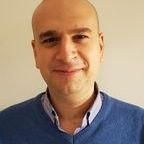
Dr Mazen Elwishi

Cathryn Holding

Dr Carmen Lopez Soto
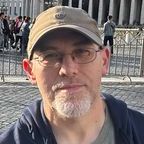
Dr Jon Martin

Sue McGowan

Dr Victoria Metaxa
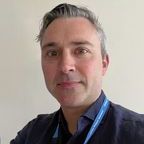
Dr Andrew Paget
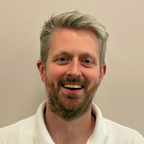
Matt Pountain

Dr Robert Simister
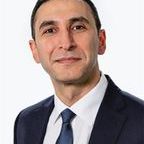
Mr Ahmed Toma

Professor Tonny Veenith

Dr Manni Waraich