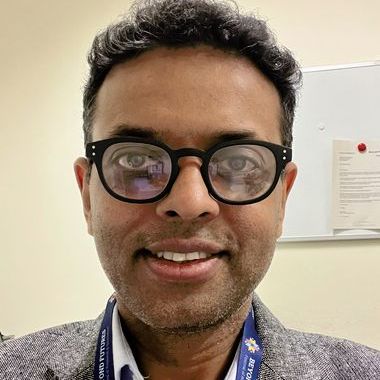
Professor Tonny Veenith
Professor of Anaesthesia, Intensive Care & Acute Care Medicine, University of Wolverhampton
Professor Tonny Veenith MBBS, PhD (Cantab), MRCP, FRCA, EDIC, FFICM is a leading clinician‑scientist in critical care, with a special interest in neurocritical care and acute neurological illness. He serves as Professor of Anaesthesia, Intensive Care and Acute Care Medicine at the University of Wolverhampton and Royal Wolverhampton Hospital. His internationally recognised research portfolio spans traumatic brain injury, neuroinflammation, critical illness, and acute neurological emergencies, supported by more than £12 million in competitive research funding secured over the past five years. He has a sustained international research profile with impactful outputs in leading medical journals, including JAMA, The New England Journal of Medicine, Nature Medicine, and The Lancet Respiratory Medicine.
Professor Veenith is the lead author of the UK’s national clinical guideline for the acute management of status epilepticus in adult intensive care, published by the Intensive Care Society. It now serves as the national standard for evidence‑based emergency neurological care (https://ics.ac.uk/resource/status-epilepticus.html). The guideline has shaped practice across UK critical care units and is widely recognised for its clarity, clinical relevance, and integration of emerging neurocritical care evidence. He is also a regional and national lead in academic training anaesthesia and intensive care medicine, holding roles including National Training Lead for the National Institute of Academic Anaesthesia and Macintosh Professor of the Royal College of Anaesthetists. He is a regular speaker at major national and international meetings on subarachnoid haemorrhage, traumatic brain injury, refractory status epilepticus, and neurocritical care pathways.
A committed educator and mentor, Professor Veenith has supervised MSc, MD, and PhD students whose work has been published in high‑impact journals and presented internationally, including at the European Society of Intensive Care Medicine and the Intensive Care Society. His leadership in curriculum development, digital innovation, and inclusive academic practice has shaped training programmes across multiple universities nationally in the UK and internationally.