Speakers
Professor Zudin Puthucheary

Dr Andrew Breen
Dr Claire Park
Hall 8
This forward-looking session reflects on the heightened visibility of intensive care during the COVID-19 pandemic and explores how critical care services can better prepare for future large-scale crises. Aligned with the conference theme of “looking forwards,” the session will examine how lessons learned can inform resilient, adaptable systems capable of responding to a range of emerging threats.
Expert speakers will consider preparedness across three key domains: conflict and wartime medicine, environmental and climate-related disasters, and future pandemics. The session will address how critical care infrastructure, workforce planning, and resource allocation must evolve to meet these challenges, alongside the importance of coordination across local, national, and global systems.
Through a combination of expert insight and strategic reflection, delegates will be encouraged to consider what effective preparedness looks like in practice, and how services can move from reactive responses to proactive planning. The session will highlight opportunities for innovation, collaboration, and system-wide resilience, supporting the development of critical care services that are better equipped for an increasingly uncertain future.
Dr Zudin Puthucheary is a Clinical Senior Lecturer in Intensive Care Medicine at the William Harvey Institute, Queen Mary, University of London, and a Consultant at the Royal London Hospital Adult Intensive Care Unit. He graduated from Nottingham University in 1997, and moved to London post MRCP in 2000. Following a 3-year stint in Sydney, he started his Respiratory training in Bristol, before completing his critical care training in London. He worked as a Respiratory and Critical Care Consultant at National University Hospital Singapore before returning to the UK.
His research focusses on acquired functional disability, and the use of metabolic, nutritional and exercise interventions to prevent and treat muscle wasting, and has published over 100 papers with a H index of 39. Zudin is a nationally elected Council member of the Intensive Care Society (UK). He was the inaugural chair of the UK National Post-Intensive Care Rehabilitation Collaborative, a multi-professional cross-disciplinary group focussing on rehabilitation and restitution of critical illness survivors. His work on acute muscle wasting has won awards from the European Society of Intensive Care Medicine , European Society of Anesthesia, the British Thoracic Society, the Intensive Care Society, The American Society of Enteral and Parenteral Nutrition and Zudin was named a Global Rising Star by the Australia and New Zealand Intensive Care Society.
He chairs the UK National Post-Intensive Care Rehabilitation Collaborative, a multi-professional cross-disciplinary group focussing on rehabilitation and restitution of critical illness survivors.
:
@Zudin_P
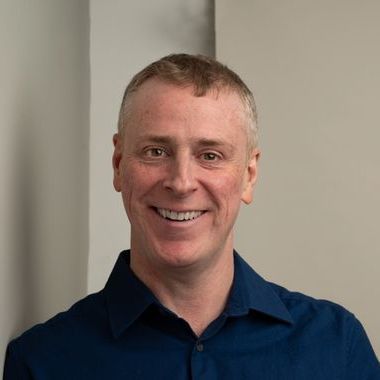
Andy is a consultant in ICM working in Leeds Teaching Hospitals, having been appointed in 2005. He is Clinical Director for Adult Critical Care in Leeds, and President Elect of the Intensive Care Society. He graduated in Liverpool in 1995, where he completed his clinical training in anaesthesia and intensive care medicine.
Andy has strong interest in point-of-care ultrasound, having been a founding member of the FICE committee, current member of the FUSIC committee and co-author of a number of POCUS accreditation programmes. Other interests include ethical decision making and advance care planning, the science of quality improvement and IV fluids education.
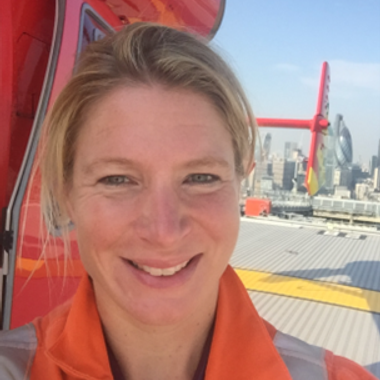
Dr Claire Park MBE is a Consultant in Critical Care at Kings College Hospital and in Prehospital Care for London HEMS. Claire is also a reserve army consultant with 23 years of previous regular army experience.
Claire is the London HEMS lead for Major Incidents and the Chief Investigator on a national research project looking at ‘Improving patient outcomes in the hot zone of major incidents.’ She is also the Medical Adviser for the Metropolitan Police Service, sits on the National Police Clinical Panel, is a Member of the Guidelines Committee for the US based Committee for Tactical Emergency Care (CTECC), a Board member of the British and Irish Tactical Medical Association (BRITMA) and Director and Co-Founder of the European Tactical Medical Association (ETMA).
Dr Park has worked closely with all of the emergency services in London on developing the joint response to high threat incidents. This multiagency work has included the development of a new primary scene triage tool which has now been implemented by all UK emergency services as well as the military and many voluntary aid organisations known as “Ten Second Triage.“
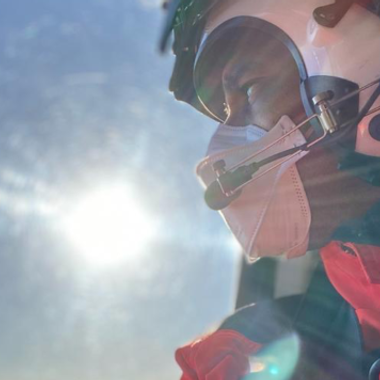
Lt Col Jeyasankar “Jey” Jeyanathan OBE is the current serving Defence Consultant Advisor for Intensive Care Medicine for the British Armed Forces, holding cadre leadership across the Army, Royal Navy and Royal Air Force. A Military Consultant in Anaesthesia, Intensive Care Medicine and ECMO with the Defence Medical Services and St Bartholomew’s Hospital Trust, London, he has spent his career developing capabilities across the full spectrum of care for the critically ill and injured — across NHS, military, humanitarian and austere operational environments.
From the Middle East and Eastern Europe to South Sudan, Zambia, Uganda and Sri Lanka, Jey’s work centres on designing, and nurturing capabilities from inception, developing clinicians and inspiring teams to deliver care in austere and resource challenged environments. His talk offers a clear eyed look at what large scale combat operations mean for critical care and why calm, considered, collaborative preparedness is both possible and necessary.