Speakers

Professor David McWilliams

Sarah Vollam

Anna Vogiatzis
Paul Mouncey
Hall 8
Following the publication of the National Confidential Enquiry into Patient Outcome and Death (NCEPOD) report in 2025, this session will explore how its recommendations are shaping the future of recovery and rehabilitation after critical illness across the UK.
It will review the current evidence base underpinning post-critical illness recovery, highlighting effective interventions, remaining uncertainties, and pragmatic approaches that can be implemented today.
The session will also examin the often-overlooked psychological consequences of critical illness. We will explore progress in understanding and addressing the mental health burden faced by patients and families, the variation in service provision across the UK, and the implications for long-term recovery and quality of life.
Finally, we will discuss the opportunities and challenges facing commissioners, providers, and clinical leaders as they seek to deliver the ambitions outlined in the NCEPOD report.
The session will end with a panel discussion, providing panel members and the audience to showcase examples of innovation and successful implementation, while also addressing the barriers that continue to hinder progress. We will consider how national datasets, including ICNARC, can be leveraged to measure outcomes, monitor impact, reduce unwarranted variation, and drive continuous improvement in critical care recovery services.
Chair: David McWilliams
Co-Chair: Paul Mouncey
Presentations:
David McWilliams is a Professor of Critical Care and Rehabilitation and Clinical Academic Physiotherapist at University Hospitals Coventry and Warwickshire NHS Trust and Coventry University's Centre for Care Excellence. He is the chair of the physiotherapy working group for the European Society of Intensive Care Medicine, and Chair of the Intensive Care Society National Rehabilitation Collaborative. David was a member of the guideline development group for the NICE guideline ‘Critical Illness rehabilitation’ and led an NCEPOD study into rehabilitation and recovery following critical illness. David is recognised as an international expert on critical care physiotherapy and rehabilitation, regularly presenting both nationally and internationally on the subject.
Sarah is a Senior Post-Doctoral Researcher in the University of Oxford Critical Care Research Group. She co-leads the NIHR-funded Enhanced Recovery After Critical Care (ERACC) programme of research, aiming to design and test an enhanced care pathway for critical care survivors.
Sarah has a clinical ICU nursing background. She is an outgoing Associate Editor for Nursing in Critical Care and Deputy Chair of the Intensive Care Society's National Rehabilitation Collaborative. She is also a Visiting Fellow at Oxford Brookes University.
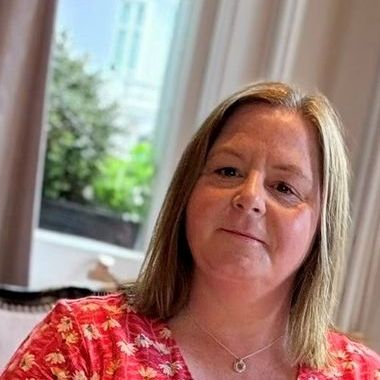
I am a Senior Programme Manager within Specialised Commissioning at NHS England, leading on the commissioning of a range of services including Adult Critical Care, ensuring that services are equitably accessible, high-quality and achieve good outcomes for patients.
I have experienced a varied career portfolio including working in addiction treatment, homelessness services and for the past 15 years in commissioning at a local, regional and national level.
I have recently completed an MSc in Health Policy at Imperial College and intend to apply this learning to translating policy into practice which drives improvements healthcare services to enable patients to recover and return to the activities that are important to them.
Outside work, I live with my partner, and our two teenage daughters. To relax, I enjoy baking sourdough and cakes in my spare time.
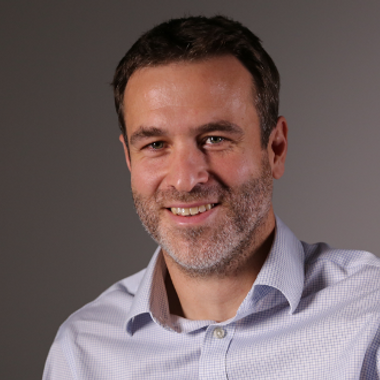
Paul is Co-Director, and Clinical Trials Unit Director, at the Intensive Care National Audit & Research Centre (ICNARC) . Paul is an epidemiologist with over 20 years’ experience of conducting multicentre randomised clinical trials, initially in Cancer, but at ICNARC focussed in adult and paediatric critical care. Paul is currently the Joint-Chief Investigator for the UK-ROX trial (NIHR130508), which is a highly challenging trial within the critical care setting, using extensive data collected routinely by the national clinical audit for critical care (Case Mix Programme) database.
Paul is the lead for the Development of an adaptive platform trial in paediatric critical care and sits on the REMAP-CAP International Trial Steering Committee. He sits on both the NIHR Critical Care National Specialty Specialty Group, which has responsibility for overseeing delivery of studies on the NIHR portfolio for critical care, and the UK Critical Care Research Group.
Andrew Bates is a critical care nurse and Postdoctoral Research Fellow at the University of Southampton and University Hospital Southampton. He has recently completed an NIHR-funded, multicentre mixed-methods study investigating the use of trauma-focused psychological therapy for traumatic stress following critical illness.
He has been awarded three NIHR fellowships, and his research focuses on the longer-term mental health consequences of critical illness, with a particular emphasis on investigating how established trauma-focused interventions may be adapted for use following critical illness. His work also explores the neurobiological underpinnings of traumatic stress, including a functional MRI study, and he is investigating the role of the gut microbiome and metabolomic phenotyping in mental health recovery after intensive care.
In addition, he is part of a multidisciplinary team examining the development and predictors of cognitive and mental ill health following critical illness, as well as access to healthcare and mental health services. He is a member of the Intensive Care Society’s Nurse Professional Advisory Group.